Thanks for stopping by our blog! We are no longer updating this site, so if you want to see the latest from SocialSnakes, head on over to SocialSnakes.org where this blog is now hosted.

Scenes from a new den

Saturday, November 12, 2011

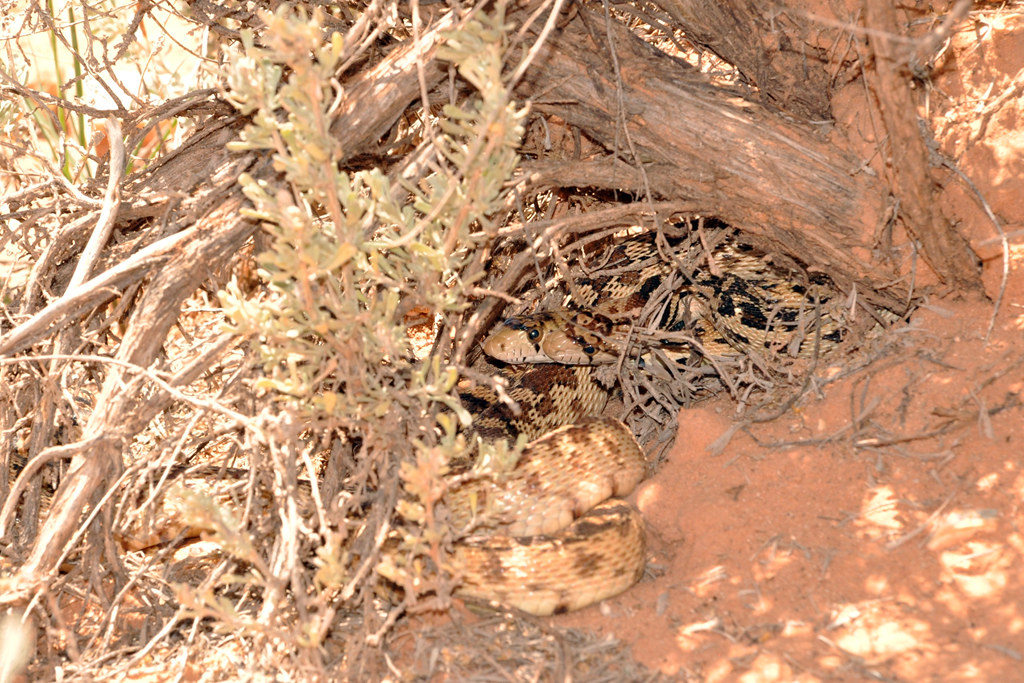
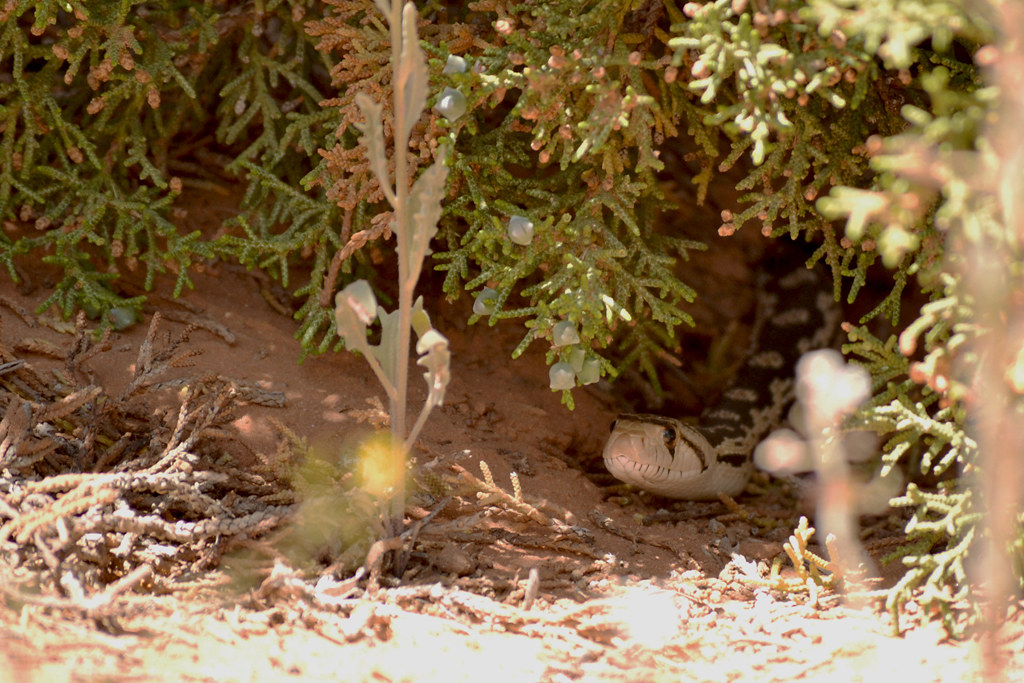
We were recently told about a new social rattlesnake den in the Galiuro Mountains. We hiked in to check it out, saw one western diamond-backed rattlesnake (Crotalus atrox), and decided to set up one of our timelapse cameras. The video below is from the first two days of our monitoring, and we were a little surprised at all the activity:


That video is a little long and it’s easy to miss all the visitors, so here are stills of all the reptiles we spotted.

WSPC0617

WSPC0618

WSPC0619
This is a juvenile Sonoran whipsnake (Coluber bilineatus). The closely related striped whipsnake (Coluber taeniatus) often shares dens with Arizona black rattlesnakes (Crotalus cerberus; see Are aggregations of Arizona black rattlesnakes stable and complex social groups?).


WSPC0672

WSPC0673

WSPC0675
A gila monster (Heloderma suspectum)! It is not unusual for Gila monsters to share dens with western diamond-backed rattlesnakes and Sonoran Desert Tortoises (Gopherus morafkai). However, this Gila checks out the den only to turn around and leave. Could it be looking for a date? It's awfully late in the year for Gilas to be out and about.


WSPC2029

WSPC2030

WSPC2031
Patch-nosed snake (Salvadora spp.) This is not a snake we have yet seen in any of our other dens. In this video, the patch-nosed appears to be checking the den out before moving on. Future videos may show if this snake continues to use the den.

There were a couple feathered reptiles here too (birds). Did we miss anyone? Who else will show up at the new den? Stay tuned...

Stop Roundups!

Friday, November 11, 2011

0 comments

Sorry for the interuption from our regularly scheduled program, but this is important.
Enjoy our blog posts?
Like snakes?
Then consider signing this petition to stop the unnecessary and cruel rattlesnake slaughter:
Ask Texas Department of Parks and Wildlife To End Rattlesnake Roundups

A day in the life of a rattlesnake family

Friday, October 28, 2011

5 comments

Rattlesnakes take care of their babies.

Yep, they really do. But, what does "care" look like in a snake? Do they feed their young like a mother bird? Do they keep them warm? Do they protect them from predators? With the exception of feeding, rattlesnakes care for their offspring in familiar ways. The following is a timelapse video (taken at 1 minute intervals) that illustrates a typical day for a new rattlesnake family. The large, black snake is Cap Mama, a female Arizona black rattlesnake that gestated with four other females and gave birth in late August to seven neonates. This video was taken when the neonates are just two or three days old.


Now let's look a little closer at some of the behaviors in the video:

WSPC0916
Before the neonates emerge for the day, Cap Mama looks out as if making sure it is safe for the neonates to come out. Here she looks toward the camera...


WSPC0917
And then she looks away from the camera. We have observed this "lookout" behavior by several different females.


WSPC1313
The neonate in the foreground of this photo is starting to stray from the group and Cap Mama notices.


WSPC1314
A gentle tap from Cap Mama reminds the neonate to stay with the group. We have also observed the females blocking neonates from straying too far (see A rattlesnake helper?).


WSPC1315
The neonate responds by returning to the group and Cap Mama heads back in as well.


WSPC1418
In this rattlesnake species, adults are darker than neonates and thus may be able to gain heat easier. By allowing neonates to sit on and near her, Cap Mama may be provisioning her offspring with heat (rattlesnakes are ectotherms: they depend on their environment for heat instead of producing their own like we do). And Cap Mama's larger size means she'll garner and release heat, perhaps even into the night when the family is tucked away in their refuge. Keeping warm helps a young snake develop, shed, and get ready to leave the nest and hunt on its own.

A rattlesnake helper?

Thursday, October 20, 2011

1 comments

Priscilla, Lois, and Arli spent their pregnancy together at a rookery from May through August, 2010. Arli moved away to a private nest shortly before giving birth.
DSC_3178 Priscilla & House, 1 September 2010

On 30 August 2010 we observed Priscilla (pregnant adult female) discouraging House (neonate / newborn) from potential exposure to a human predator. Because Priscilla was pregnant at this time, House had a different mother. To our knowledge, this is the first observation of helping - where an animal cares for another's offspring - in a snake. Perhaps this is why some female rattlesnakes aggregate during gestation and remain together after giving birth.

panel1 15:27 Priscilla (adult female) and House (neonate) are at rest in a shaded rock shelter.

panel2 15:28 House moves restlessly in cover and then begins to move toward open ground.

panel3 15:29 Priscilla swiftly confronts House before he wanders away from cover; her posture is unusually rigid.

panel4 15:31 House stops, turns around, and coils in cover. Priscilla's head returns to her coils.

Ménage à trois (part 2)

Thursday, August 11, 2011

2 comments

(if you haven't already, see part 1)


When we left our 3 gophersnakes, Bluto had just interrupted courtship between Popeye and Olive Oyl and was biting Popeye repeatedly along his body. Popeye released his bite-grip on Olive Oyl and she fled so fast that we were unable to follow. Bluto continued biting Popeye, making him to wince but not retaliate. Instead, Popeye seeks refuge in a nearby burrow. In his fervid biting, Bluto barely notices that Popeye has escaped, actually biting himself a couple times by mistake. Finally realizing that his competitor is sidelined, Bluto resumes searching for Olive Oyl, who had a 2 ½ minute head start.


Bluto appears to be in a hurry, and while he initially showed brief reactions to close encounters with us, he no longer expresses concern. He flicks his tongue almost continuously, halting almost imperceptibly several times a second to deliver particles into his mouth. Undoubtedly, Bluto is following traces of Olive Oyl, but apparently her trail is not clear. He travels in wide loops, backtracks, and even ascends a pine tree. Perhaps Olive Oyl has passed through this area more than once. And the wind must make his search even harder!

Popeye’s urges can wait no longer. We find him peering from the burrow only 3 minutes after entering. After five more minutes, he locates Olive Oyl’s scent trail, and heads off in the same direction as the other two.


He appears to be a little more careful than Bluto, pausing to hone in on the path ahead. We try to keep tabs on both males as they move about, but we are distracted by a beautiful rattlesnake and Popeye slips away.

DSC_6448

After about an hour Popeye reappears, coming within just a few meters of Bluto. He appears to pass Bluto, and we again lose him as he cruises on through the vegetation. Finally, at 1417, 80 minutes after we last saw her, we find Olive Oyl being courted by Popeye on open ground beneath a tree, 113 meters NE of their roadside rendezvous (see part 1). Moments later, Bluto finds the pair, Olive Oyl slips away, and conflict begins anew.


In a repeat of part 1, Popeye is first to find and court Olive Oyl, but they are interrupted by latecomer Bluto, and the female flees. With an enduring calm, Popeye once again slips from Bluto's sway.


To be concluded...

Desert Dining

Thursday, August 4, 2011

1 comments

On a humid Sonoran Desert evening we met up with Roger Repp and Gordon Schuett at their study site along with some old friends from near and far. Wandering the washes, we find a juvenile desert rodent stumbling out of a hackberry bush into the dry stream channel. It turns at our approach and manages a couple of hops away before spiraling onto one side. While at first we attribute its ungainly locomotion to its youth or perhaps being blinded by a flashlight, it soon becomes clear: its situation is dire.


Six minutes after encountering the rodent, we spot a tiger rattlesnake (Crotalus tigris) emerge from the bushes about 10 meters downstream. It’s a beautiful male with a long, intact rattle, and he’s intent on finding his meal. This next video clip shows him scent trailing his prey.


Tiger rattlesnake venom is extremely potent, and this one knows his prey couldn’t get far. His search is slow but methodical; he may turn away momentarily, but he is quick to correct course and close in on his meal. In the following video, the tiger passes very close to the rodent, visible above the stick to the left. Portions of the film are sped up 3 times.


Observations like this are infrequently witnessed. By searching on foot, keeping our minds open to what may come, and being willing to sit and watch what unfolds were we able to observe this feeding event. That, and quite a lot of luck....

In the interest of full disclosure, this snake was captured after feeding. He is now being radio-tracked by Roger and Gordon, and further updates on this snake’s life will be available on Roger’s Suizo Report, posted regularly to John Murphy's blog: http://squamates.blogspot.com/p/roger-repps-suzio-report-page.html

Ménage à trois (part 1)

Wednesday, June 15, 2011

29 May 2011 – House Rock Valley – Northern Arizona

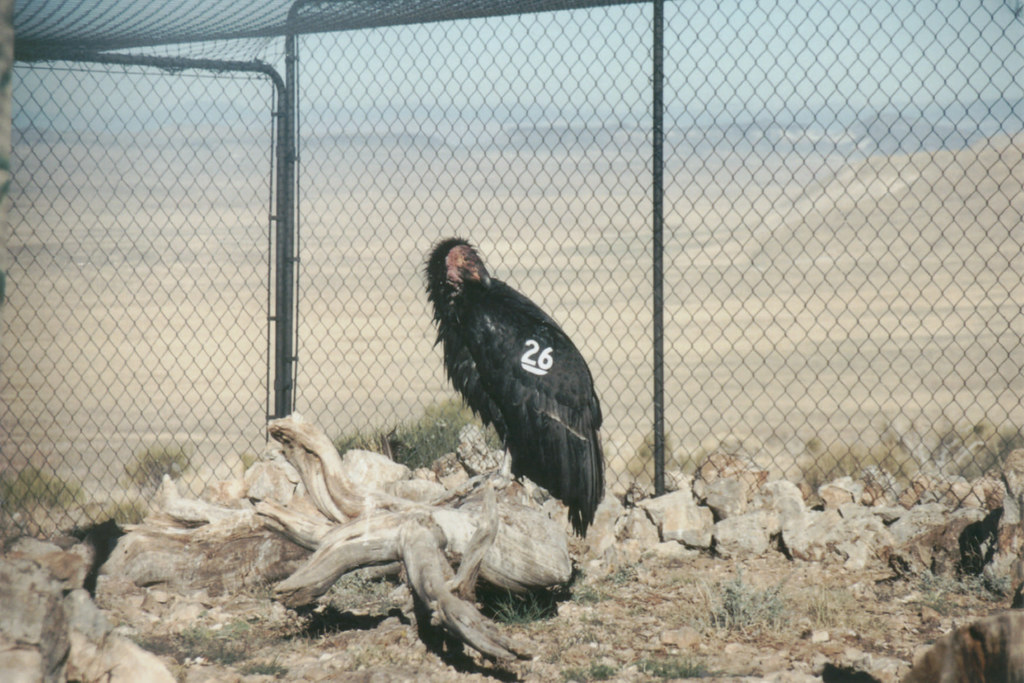
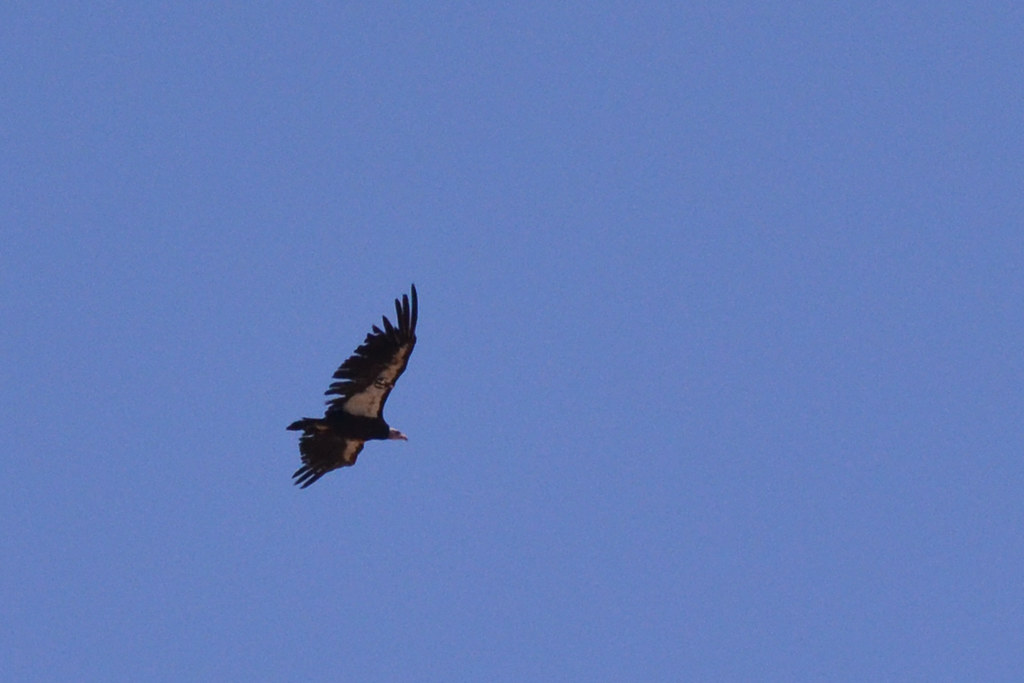
In 1996, The Peregrine Fund reintroduced California condors to northern Arizona. Once down to a mere 22 captives, there are now nearly 200 condors flying free in the southwestern US. We visited northern Arizona in hopes of finding snakes beneath soaring condors.

condor 126
condor in flight


We learned of a trio of condors (2 males and a female) raising a chick in a cave overlooking House Rock Valley. Like Arizona black rattlesnakes, condors are social: they forage and roost in groups in which immature birds learn from experienced adults how to find food and appropriate resting sites. So it is perhaps not so unusual for a nest to have an "extra" adult male helper. We attempted to see this trio of nesting condors, but the wind howled so fiercely that we were barely able to fix a binoculared gaze on the cliffs above us. Besides, would an animal choose to be out in such unpleasant conditions? We thought not, and decided to find a place to explore that would shelter us from the wind. The valley bottom, with stands of juniper and islands of protruding sandstone, looked to be such a place.

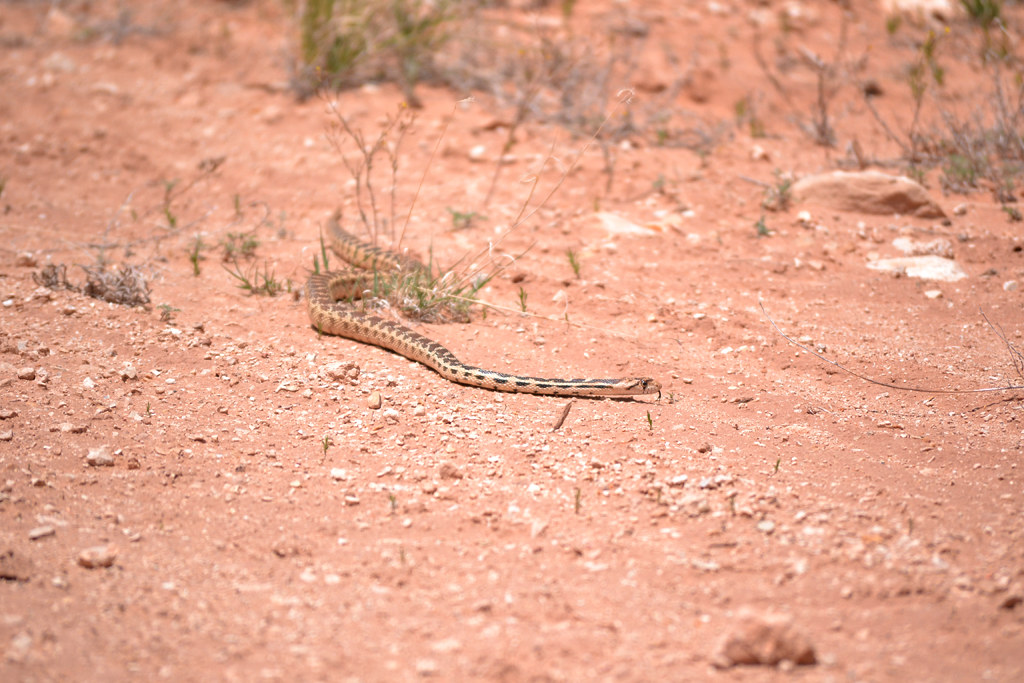
We followed a dirt road and arbitrarily selected a place to park. We threw on our packs and crossed the road, noticing a long, dark form on the road we’d just driven. We approached to find a gophersnake (let's call him Bluto) whose chocolate ladder of blotches contrasted beautifully against a pale yellow background color. Surely realizing his vulnerability, Bluto headed directly to a juniper at the road’s edge. By the time we drew our cameras, he had found a burrow and disappeared into it. Our lamentations of his escape were short-lived, because in an adjacent sagebrush lay not one but TWO gophersnakes. Given the season and the apparent amorous nature of their entanglement, we surmised they were a male and female pair (let's call them Popeye and Olive Oyl).


Olive Oyl maintains a wary eye while Popeye's attentions are consumed by his potential partner.


After three or four minutes, the couple tired of our presence and retreated into a burrow on the opposite side of the sagebrush. Surprisingly, Bluto was already making his comeback:


Bluto, the largest of the trio, assessing threats topside.

Rather than try our patience against reptiles, we decide to explore the area for a while and come back later.

habitat

After about an hour we make our way back to the gophersnakes. As we walk down the road toward the spot, we see Olive Oyl meandering through the roadside vegetation, about 10 m from where we initially found her. She turned as if to cross the road, but paused before entering the barren dirt roadway.

Olive Oyl

After a couple of minutes, Popeye came cruising through the same grass she’d just passed. We watched him make several wide loops, even coming within a couple meters of her before turning away. Meanwhile, after remaining motionless for several minutes, Olive Oyl turns and moves slowly from the road. Popeye finally comes upon Olive Oyl, grasping her with his mouth behind her head (see video at 0:41). Feeling vulnerable, perhaps because of our presence, Olive Oyl is able to slowly worm to what cover is afforded by a small shrub.


Bluto enters the stage from the same area as the other two, vaguely following the same path. We watch as he loops and circles, at times retracing his path backwards. He approaches the pair within a couple meters several times, and even passes by our feet, which gives him only momentary pause. Finally, his search is over.


Bluto immediately begins biting Popeye. Finally, Popeye is induced to release his grasp of Olive Oyl. Without delay she flees and we lose track of her. Although Popeye flinches and squirms with apparent discomfort from the biting he receives, he does not appear to retaliate in kind. He escapes the assault by disappearing into a burrow in the lower left quadrant of the frame. Once Bluto realizes his rival has fled, he turns his attention to Olive Oyl, following the exact path she used to escape the dispute.

To be continued....