For in the end, we will conserve only what we love. We will love only what we understand. We will understand only what we are taught. – Baba Dioum, Senegalese Conservationist
Bree Putman,
Marty Feldner,
Jeff Servoss,
Tammie Wik,
Robert Hansen,
Bill Rulon-Miller,
Dell Despain,
Mike Pingleton,
John Taylor,
C. Papritz,
Norman D,
Mark Unger,
James Maughn,
Brad Sillasen,
Beverley Amarello,
Jeff Amarello,
Angelo Amarello,
Rusty Ligon,
David,
Emily Taylor,
Lindsay Miles,
Bruce Christman,
Sal Scibetta,
Ben Smith,
David Kelly,
Mike Cardwell,
Brendan O'Connor,
Chip Cochran,
Melissa Meadows,
Danielle Lancellotti,
Steve Hain,
Kim,
Devon Pearse,
Dave Hausman,
Koko Hausman,
Mary Beth Jordan,
Ben Jordan,
The Reptilist,
and The Tucson Herpetological Society!
Thanks for stopping by our blog! We are no longer updating this site, so if you want to see the latest from SocialSnakes, head on over to SocialSnakes.org where this blog is now hosted.
Roger, adult male Arizona black rattlesnake named for Roger Repp (photo by Roger Repp).
We've been really lucky to have some fantastic volunteers at the site this spring (and also why I haven't had time to update the blog :-)). One volunteer did his own write up of our adventures last weekend, which I highly recommend reading:
This has been a strange spring here at the rattlesnake dens. It has either been unusually hot or like this:
14 April 2012
Last year, we saw a gradual increase in social basking behavior, followed by snakes dispersing for their summer hunting grounds. That process has been halted and restarted twice this year already! But, this site had a very dry monsoon season last summer, followed by a dry winter, so the precipitation is greatly needed here. And the snakes appreciate it as well, even if its accompanied by cold temperatures:
That morning our cameras caught several snakes drinking the rain, hail, and snow as it fell, but they quickly retreated deep into their dens again. There was little activity for the next few days and you can see why here:
More on snake activity later! We've seen so many familiar faces already...
I'm hoping to have some current stuff to post soon, as the snake activity is really picking up right now, but I haven't had a chance to go through our photos and videos yet. So, here's a little something from last year, just for fun!
A cold storm brought some much needed precipitation (a mix of rain, snow, and hail) to our southern dens last April and an Arizona black rattlesnake (Crotalus cerberus) and striped whipsnake (Coluber taeniatus) took advantage of it to get a drink.
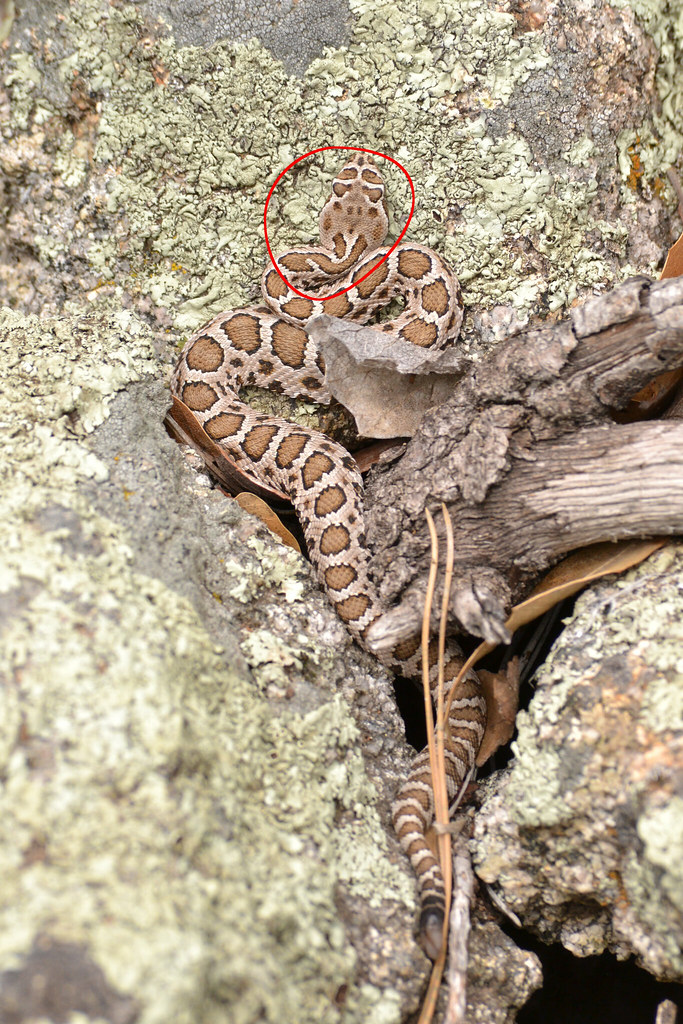
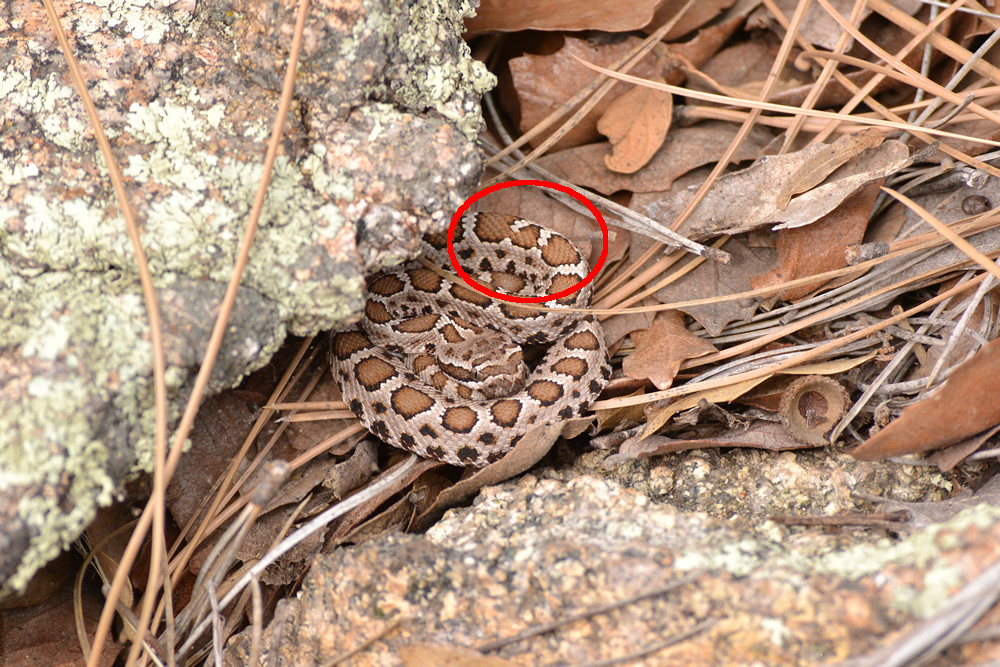
Awhile back we dedicated an entire post to the lucky or skillful young rattlesnakes that survived their first winter. In this population neonate (newborn) rattlesnakes have less than a month to find their first meal and locate a safe place to spend the winter. Of course it helps when your mom gives birth a couple yards away from her den (overwintering site), as Sigma did.
10 April 2012: Today we encountered two first year juveniles (rattlesnakes born last fall) near one of the dens, one basking and one hunting. They seemed very familiar, and sure enough, they are the son and daughter of Sigma, famous for her interactions with a squirrel.
Back in November, we told you about a new snake den in the Galiuro Mountains (Scenes from a new den). We have been monitoring that den with our timelapse cameras ever since. After a relatively quiet winter, activity is really picking up around here. Based on our fall observations, we knew that western diamond-backed rattlesnakes (Crotalus atrox), gila monsters (Heloderma suspectum), Sonoran whipsnakes (Coluber bilineatus), and patch-nosed snakes (Salvadora spp.) visit this den. So we weren't surprised to see this large guy exiting the den on 29 March:
The rattlesnakes have been pretty active at the den's entrance for the past few weeks, so we knew there were a couple male and female diamond-backeds inside. What we did not expect to see was this handsome fellow:
Yeah, that's an Arizona black rattlesnake (Crotalus cerberus). The other Arizona black rattlesnakes we're monitoring here are just emerging from their dens and none have moved away yet, so its highly unlikely this guy just showed up at this spot. He probably shared this den with the western diamond-backeds all winter. These species are not often found together and this may be the first observation of the two sharing a den. PLEASE let us know if we're wrong about that - hey, you can use our new facebook commenting feature below!
Not your classic Arizona black rattlesnake den :-)
Drs. Rulon W. Clark, William S. Brown, Randy Stechert, and Harry W. Greene [1] found cryptic sociality in timber rattlesnakes (Crotalus horridus). Timber rattlesnakes use communal winter dens and pregnant females aggregate together at rookeries to gestate their young. Clark and colleagues collected DNA samples from rattlesnakes to examine relatedness within these aggregations. While all individuals from the same den were not related, aggregations of juveniles of the same age group and pregnant females that shared rookeries were related.
An adult male with several female and juvenile Arizona black rattlesnakes basking just outside their den.
Timber and Arizona black rattlesnakes are similar in many aspects of their behavior. Arizona blacks also den communally, although this behavior is not restricted to the northern part of their range as it appears to be in timber rattlesnakes [1,2]. Some female Arizona blacks use rookeries at or near their dens, although many nest alone.
So, are aggregations of Arizona black rattlesnakes related? Or like timber rattlesnakes, perhaps only aggregations of pregnant females and juveniles are related. Or maybe aggregations of Arizona black rattlesnakes are just random groups of unrelated individuals. This is one our research topics, which you can read more about here. Hopefully we'll be able to answer the above questions over the next couple years.
Clark, R.W., W.S. Brown, R. Stechert, and H.W. Greene. Cryptic sociality in rattlesnakes (Crotalus horridus) detected by kinship analysis. Biology Letters rsbl20111217; published ahead of print February 22, 2012. doi:10.1098/rsbl.2011.1217
Brown, W.S. 1993. Biology, status, and management of the timber rattlesnake (Crotalus horridus): a guide for conservation. Herpetological Circular 22.
Cap Mama takes advantage of some rain to take a drink of water dripping off the rock above.
Drinking is a behavior rarely seen in wild snakes. In fact, some would say that snakes don't need to drink. While it is rare to see this behavior, snakes do drink and likely need water in addition to what they acquire from their food. How important drinking is to snakes became very clear to me one day in March 2006 (Repp & Schuett 2008). Despite cold, rainy, windy, and even snowy weather, we saw more than a dozen western diamond-backed rattlesnakes drinking rain and snow outside their dens!
A poor quality video of rattlesnakes drinking snow during the long, dry winter of 2005-2006. Ugh - glad we have upgraded our cameras!
Last summer was pretty dry at our field site; the monsoon did not amount to much. In the photo at the top of this post, you can see Cap Mama snagging a drink about nine days after giving birth. The following videos were taken by our time-lapse cameras while the snakes were still pregnant:
This is Cap Mama again, about a week before she gave birth. Shortly after the rain starts, she emerges and drinks rain as it falls on her body.
Meanwhile on the other side of this rock outcrop, another pregnant female (Stache) also sneaks out for a drink. Unfortunately there is some grass in the way, but you can still get an idea of what a drinking snake looks like.


 Posts
Posts