Thanks for stopping by our blog! We are no longer updating this site, so if you want to see the latest from SocialSnakes, head on over to SocialSnakes.org where this blog is now hosted.

Red

Wednesday, June 20, 2012

0 comments

Each summer, a friend of ours is visited by a male Arizona black rattlesnake whom she calls Red. Red spends much of the active season hunting near bird baths and feeders (or, in Arizona, 'snake feeders'), patiently coiled and awaiting an inattentive or distracted bird.

Usually Red turns up in late May, but with summer coming on and no sign of him, our friend was getting worried that a forest fire had been his end.

Just a week ago, our friend notified us of Red's arrival. And he's back in grand style!

Rattlesnakes are not known for their climbing abilities, but check out Red:

1 1
Red climbs higher and higher...

1 1
Red tops out on stretch of bare trunk (left) and starts back down (right).

1
Red slips safely off the tree.

Red gets up on some easy limbs, but you can see in the third picture that he has no way to get up the vertical trunk of the oak.

Why is Red climbing? Is he hunting? Rattlesnakes are classified as ambush hunters, meaning that they find a promising spot (as determined by scent and possibly, as in the case of an elevated bird bath, by sight) and sit and wait for their prey to come to them. Less often will rattlesnakes forage actively, i.e., crawl around looking for prey to eat. He may very well be after a meal up there!

While our friend hasn't seen any evidence of birds nesting in that tree, she has seen chipmunks using a hole near the top, so they may be nesting inside. Perhaps Red sensed the chipmunks and was trying to get them. If that is the case he is quite ambitious:

1
The red arrow points to the spot where Red climbed into the tree. The red circle shows the possible chipmunk nest.

Our friend was impressed by Red's grace off the ground. Although we have never seen an Arizona black rattlesnake climb higher that a downed log to hunt, we think, if a ladder of limbs permitted, Red would have gone all the way up.

Thanks to our friend for sharing the story and photos, and to Red for amazing us!


A tussle at the den?

Thursday, June 14, 2012

0 comments


I am currently reviewing all the footage from the dens this past spring and will have many things to share very soon (until then, you can see a new timelapse photo almost daily on our facebook page). Recently, I came across some rather unusual behavior:


What's unusual about this? Well, interactions among snakes at our dens usually look like this, where snakes just appear to be resting with each other:


So what's going on in the first video? We have never before seen any reproductive activity (male combat or males courting females) at our dens, but we think this might be combat. This timelapse video was taken at 30 second intervals, so much of the fighting action is lost. Also keep in mind, if you've never seen rattlesnakes fight, it's gentler than you might expect (not our video):


For years people thought that combat, or the so-called 'rattlesnake dance,' was courtship between males and females. Like many animals, rattlesnake combat is largely ritualistic and rarely involves biting. The goal is to topple your opponent, similar to professional wrestling (hence the twisting to be 'on top' in the above video).

For comparison, here's a male Arizona black rattlesnake courting a female:


So what do you think is going on in the timelapse video at the top of the page?


Bluffers & Cowards

Saturday, May 12, 2012

Snakes are first cowards, then bluffers, and last of all warriors
(Pope, C.H. 1958. Snakes Alive and How They Live. Viking Press, New York, NY.) 


Yesterday morning Lula (our dog) and I headed back from tracking our rattlesnakes on a trail through the mesquite forest. Lula was only a step or two ahead, so I couldn't see the trail right in front of me. Mid-step, I saw a western diamond-backed rattlesnake (Crotalus atrox) stretched out across the trail where my foot was coming down. I immediately jumped back but Lula hadn't missed a step as she walked right over the snake. The snake reacted to my jump by assuming the defensive posture seen above and rattling.

Many believe that rattlesnakes spend their days waiting for a chance to 'attack' us, our children, and our pets. This rattlesnake had the perfect opportunity to attack us, but never attempted to bite. After a minute or two of rattling, it went back about its business:


Why? From a snake's perspective, we are the predator, the threat, and they are scared of us. A snake's first line of defense is to hope you don't see it (crypsis or camouflage), then attempt to escape (cowards) and/or display (for example rattling, bluffers). If given no other choice, they strike (warriors). And this is supported by numerous studies (for example: Gibbons & Dorcas 2002, Amarello et al. 2008), not just the anecdote presented here. Additionally,

“50 to 70% of reptile bites managed by the Arizona Poison and Drug Information Center were provoked by the person who was bitten--that is, someone was trying to kill, capture or harass the animal.” (Arizona Poison & Drug Information Center)

So perhaps we have something to learn from the snake: it is in everyone’s interest to leave each other alone.

Further reading:

Amarello, M., K. Bonine, and D. Lazcano. 2008. Factors influencing the antipredator behavior of Mexican lance-headed rattlesnakes (Crotalus polystictus) toward humans. Pp. 229-234 in W.K. Hayes, K.R.Beaman, M.D. Cardwell, and S.P. Bush (eds.), The Biology of Rattlesnakes. Loma Linda University Press, Loma Linda, CA.

Arizona Poison & Drug Information Center. Rattlesnakes (information on venomous snake bites in the USA).

Gibbons, J.W. and M.E. Dorcas. 2002. Defensive behavior of cottonmouths toward humans. Copeia 2002: 195-198.


Special, unofficial, guest blogger

Monday, April 30, 2012

0 comments

Roger
Roger, adult male Arizona black rattlesnake named for Roger Repp (photo by Roger Repp).

We've been really lucky to have some fantastic volunteers at the site this spring (and also why I haven't had time to update the blog :-)).  One volunteer did his own write up of our adventures last weekend, which I highly recommend reading:

Serpent Research: Suzio Report, Off Plot Part 2

You can read more from Roger here

Big thanks to Marty Feldner, Roger Repp, and John Slone for your help!


Spring storm

0 comments

This has been a strange spring here at the rattlesnake dens. It has either been unusually hot or like this:

 spring storm
14 April 2012


Last year, we saw a gradual increase in social basking behavior, followed by snakes dispersing for their summer hunting grounds. That process has been halted and restarted twice this year already! But, this site had a very dry monsoon season last summer, followed by a dry winter, so the precipitation is greatly needed here. And the snakes appreciate it as well, even if its accompanied by cold temperatures:

That morning our cameras caught several snakes drinking the rain, hail, and snow as it fell, but they quickly retreated deep into their dens again. There was little activity for the next few days and you can see why here:

More on snake activity later! We've seen so many familiar faces already...


Just for fun!

Friday, April 20, 2012

0 comments

I'm hoping to have some current stuff to post soon, as the snake activity is really picking up right now, but I haven't had a chance to go through our photos and videos yet. So, here's a little something from last year, just for fun!

A cold storm brought some much needed precipitation (a mix of rain, snow, and hail) to our southern dens last April and an Arizona black rattlesnake (Crotalus cerberus) and striped whipsnake (Coluber taeniatus) took advantage of it to get a drink.


Teardrop & TIE Fighter

Friday, April 13, 2012

0 comments


Awhile back we dedicated an entire post to the lucky or skillful young rattlesnakes that survived their first winter. In this population neonate (newborn) rattlesnakes have less than a month to find their first meal and locate a safe place to spend the winter. Of course it helps when your mom gives birth a couple yards away from her den (overwintering site), as Sigma did.

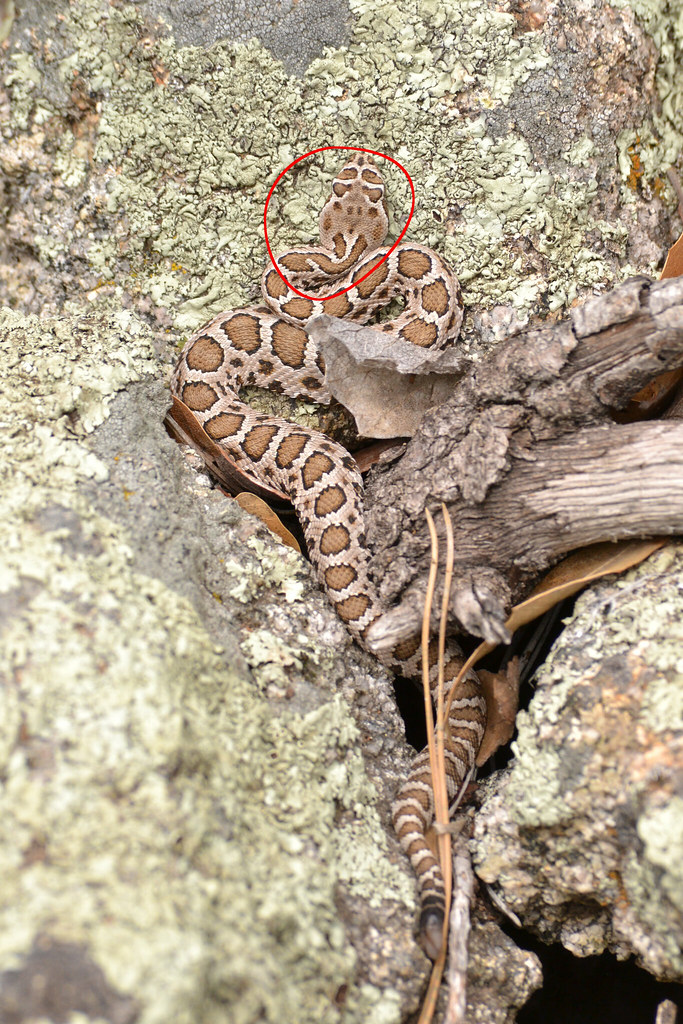
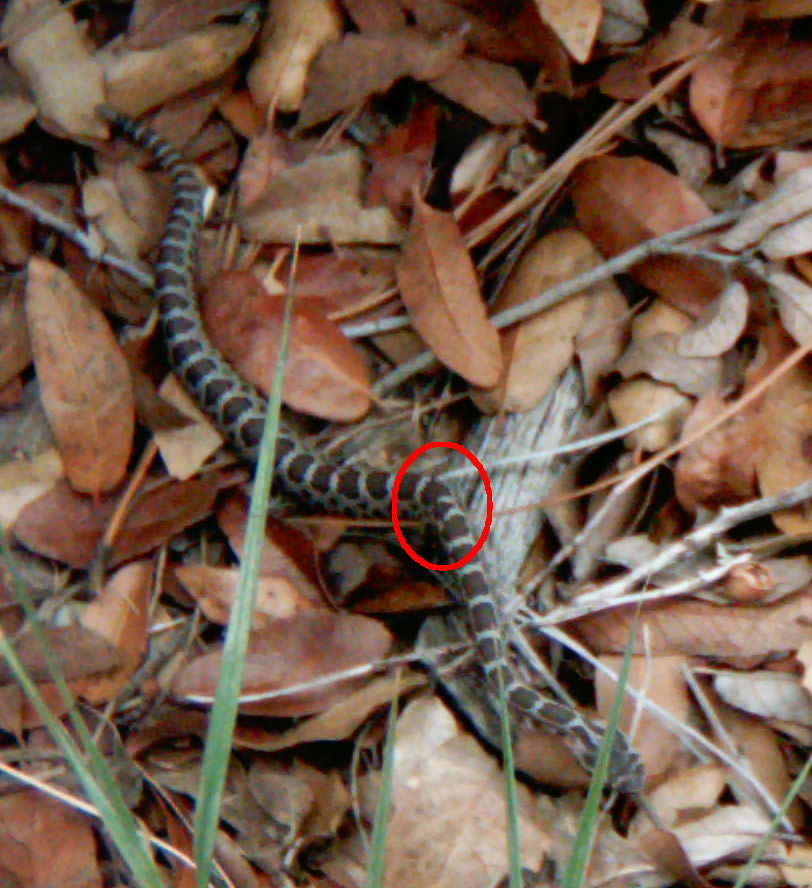
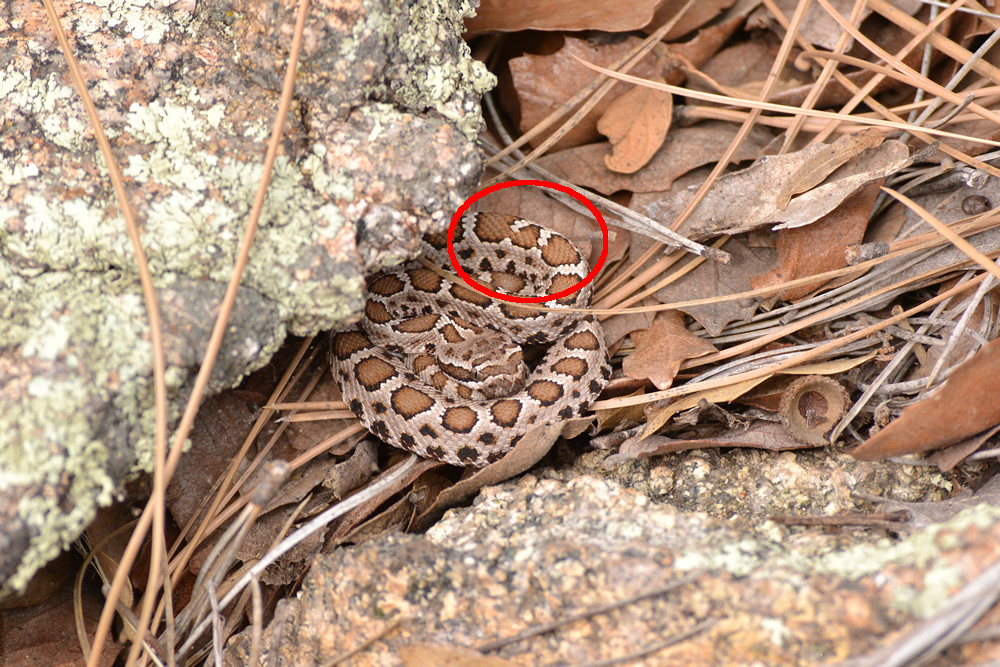
10 April 2012: Today we encountered two first year juveniles (rattlesnakes born last fall) near one of the dens, one basking and one hunting. They seemed very familiar, and sure enough, they are the son and daughter of Sigma, famous for her interactions with a squirrel.

Sigma and Teardrop, 6 September 2011.

Teardrop, 10 April 2012

TIE fighter, 6 September 2011.

TIE fighter, 10 April 2012.

Congratulations TIE fighter and Teardrop – you’ve cleared the first major hurdle of your life. We hope to see much more of you in the future.

Related posts:
Survivors
Sigma vs. the squirrel